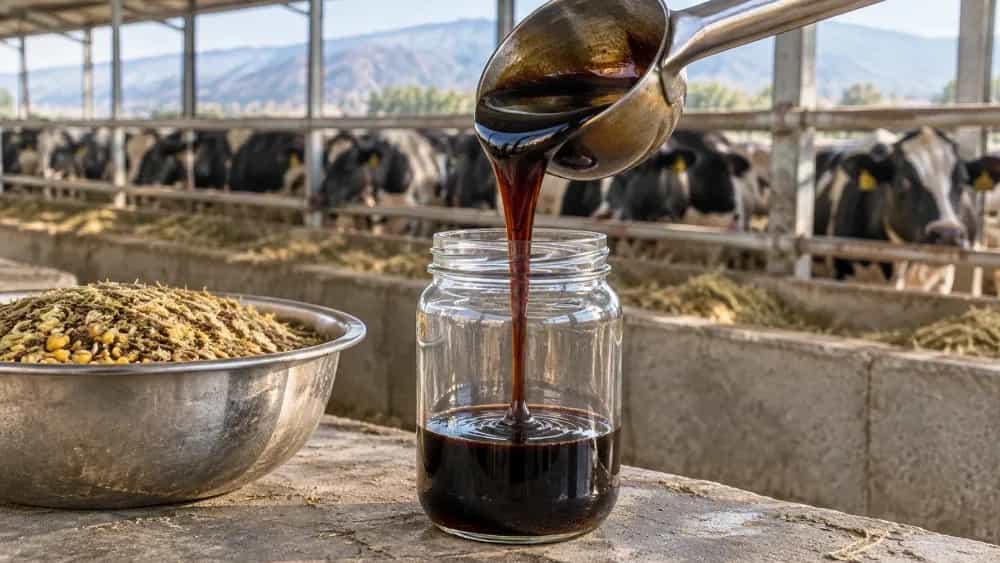
Two shipments of beet molasses may look similar, but do not behave the same once they enter the warehouse or feedlot. One mixes well with the feed and the other makes it difficult due to improper concentration, impurities or storage conditions. For a buyer in Qazvin, it is not just about finding the lowest price; The problem is to know exactly what product he is getting and whether it is suitable for his intended use or not. The root of many disputes is buying based on appearance or price per kilo, without checking the specifications of the same shipment.
What is beet molasses and when is it the right choice?
Beet molasses is a thick and sweet product that remains after the extraction and crystallization of sugar from sugar beets. This substance can help in animal feed to improve palatability and provide part of the ration's energy, but its quality and quantity should be determined based on the analysis of the cargo and the formula of the ration.
To decide, first clarify the application: is the goal to increase feed acceptance by livestock, use in compound feed or evaluate a raw material for feed production? The answer of each changes the criteria of purchase and consumption. The same distinction is important for beet molasses in agriculture; A product evaluated for animal feed should not be assumed to be suitable for soil application or foliar application based solely on the name "molasses".
What factors determine the quality and price of beet molasses?
The price of beet molasses should be read along with measurable quality, delivery conditions and shipping cost. Two offers with the same price per kilo, if they differ in terms of dry matter or delivery cost, they do not have the same purchase value.
Before comparing offers, specify the price for which delivery location, order volume and technical specifications. A verbal figure without these details is not a solid basis for decision making.
Dry matter, sugar and cargo uniformity
Dry substance and sugar composition show how much of the product's weight is related to non-aqueous substances and what are the characteristics of its usable part. The dark appearance and high concentration alone do not prove the amount of sugar, nor the suitability of the product for a specific diet.
For continuous or bulk purchases, it makes sense to request an analysis sheet for the same shipment. Depending on the type of consumption, it is important to check the dry matter or brix, sugar, ash and, if needed, minerals. Brix is a useful indicator for initial comparison, but it should not be considered the exact equivalent of sugar percentage without considering other soluble substances. If the shipments come from different sources, include the specification change in the feed formula.
Handling, storage and quality at the point of delivery
The quality of molasses at the moment of delivery is as important as the declared specifications. A contaminated tank, water ingress, improper cap or unrepresentative sampling can change the result of an apparently suitable purchase.
Molasses should be kept in a clean and suitable tank and it should be possible to stir, drain and sample it safely. An unusual change in smell, visible contamination, or noticeable differences between parts of the shipment are signs to stop and investigate further; None of them take the place of testing. When comparing the price, clarify the shipping cost to Qazvin, unloading method and sampling responsibility in the text of the agreement.
Measurement of comparison | Informative proposal | Evaluable proposal | Impact on decision |
Product specifications | Name only "beet molasses" | Consignment related analysis | Possibility to measure suitability with consumption |
Price | Amount per kilo, without delivery conditions | Price with volume, delivery location and shipping | Actual cost comparison |
Sampling | Uncertain or old sample | Representative sample of the cargo being traded | Reduction of differences after delivery |
Storage and unloading | Undisclosed conditions | Specified storage and unloading method | Reducing the risk of pollution and waste |
همین حالا تماس بگیرید!
پاسخ فوری و مشاوره رایگان در انتظار شماست.
Mistakes that increase the cost of molasses
In my experience, the main buyer-supplier dispute often starts with the vagueness of the delivery criteria, not the price number itself. When the sample specifications, volume and delivery point are recorded from the beginning, it becomes easier to check the quality and follow up on the possible discrepancy.
I, Mr. Fathi, in tracking the orders of Vinas, beet molasses and animal feed in Qazvin, I recommend that the buyer ask three clear questions before finalizing the order: "Which shipment does this analysis belong to?", "How will the sample be taken during delivery?" and "What will be the final cost to the point of consumption?" These are simple questions, but don't let an attractive price hide technical and implementation uncertainties.
Another mistake is to equate beet molasses for livestock with any sweet, dark liquid on the market. Vinas and beet molasses do not have the same origin, composition and place of consumption; The visual or mental similarity of the product is not enough to replace them in the diet. Also, in bulk purchases, a sample taken only from the surface of the tank may not give an accurate picture of the entire load. The sampling method must be in harmony with the condition of the tank and the discharge conditions.
How to evaluate beet molasses for our consumption?
The right path starts with determining the application and goes through sampling, comparing delivery costs and controlling consumption. This arrangement helps to make purchases based on real needs, not just on product appearance or a price number.
- Specify the application. For animal feed, determine the type of animal and the position of molasses in the ration. For agricultural applications, check the intended use and technical requirements of the same application separately.
- Ask for same shipment specifications. Record dry matter or brix, deliverable composition information, sampling date, and shipment origin. If the consumption is sensitive or the purchase volume is high, agree on independent testing.
- Coordinate the sample and delivery conditions. Agree on the sampling time, sample container, unloading place and shipping responsibility before shipment.
- Compare the price based on the delivery. Add the shipping and unloading fee to the product amount and consider the dry matter difference. The cheapest nominal price is not necessarily the lowest applicable cost.
- Initiate controlled consumption. In animal rations, make changes with the advice of a nutritionist and monitor feed acceptance, mixing and storage conditions. If you see an unusual change in quality, stop consuming the shipment until investigation.
In Fathi Animal Feed and Aquatic Feed, the activity in the distribution of animal, poultry and aquatic feed in Qazvin gives us the opportunity to see the issue of molasses along with other components of feed supply. This view is especially valuable when a buyer must distinguish between the use of molasses, options such as Vinas, and the actual cost of delivery; The final decision should still rely on product specifications and consumer needs.
Conclusion and final opinion
Beet molasses is a good purchase when its use is clear, the quality of the cargo can be checked, and the delivery cost is transparent. The price per kilo alone does not answer whether the product is worth it for your ration or consumption.
I, Mr. Fathi, at Fathi Animal Feed and Aquatic Feed prefer to start the conversation about beet molasses in Qazvin from three things: intended consumption, cargo specifications and delivery conditions. If you have this information, we can discuss the fit of the product and the questions that should be answered before ordering.